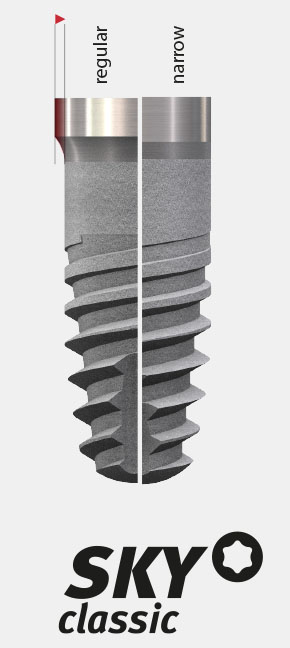
The long machined neck of the SKY classic implant offers optimal conditions for soft tissue attachment. This makes the implant particularly suitable for steeply sloping or irregular bone combs as well as for transgingival implant insertion without big incisions. The soft tissue forms a gingival cuff that protects the implant from plaque buildup and inflammation in the long term. For supracrestal positioning, the SKY classic can also be used as a short 6 mm implant.
SKY classic is suitable for all standard application areas. Due to its special neck design, it is a suitable solution especially for irregular bone ridges. The length of 8 mm also allows the use as a short tissue-level implant.
The SKY classic tissue level implant was developed for long-term stable hard and soft tissue conditions. The supracrestal implant-abutment connection reduces critical micro-movements in the crestal bone area and creates optimal conditions for stable aesthetic results.
SKY classic 3.5 narrow platform
Narrow gaps. Big possibilities.
The SKY classic 3.5 narrow platform extends the existing SKY classic portfolio and replaces the former SKY classic 3.5 with regular platform.
It is the ideal implant for situations whith limited space conditions. The slimmer platform variant is designed for narrow tooth gaps, reduced mesio-distal space and aesthetically demanding restorations. It creates more distance to neighbouring teeth and implants and thus room for stable soft tissue conditions and long-term aesthetic results.
Titanium Grade 4 KV with 810 - 860 MPa mechanical stability and at least 15% elongation
IMPLANT POSITION
Supracrestal to tissue level
DIAMETERS
3.5 | 4.0 | 4.5
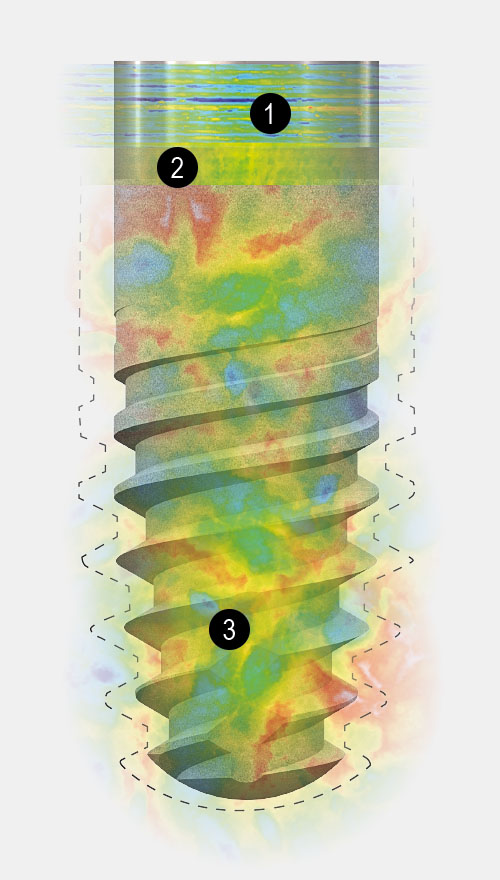
Surface Finish
osseo-connect-surface (ocs)®
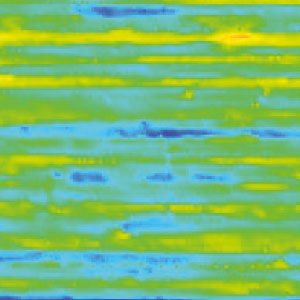
1) 1.5 mm machined surface
supports connective tissue adhesion
2) 0.5 mm etched surface
allows bone and soft tissue adaptation
3) Blasted & etched surface
for the attachment of osteoblasts for rapid
osseointegration
The proven osseo-connect-surface(ocs)® supports hard and soft tissue adhesion and rapid osseointegration.
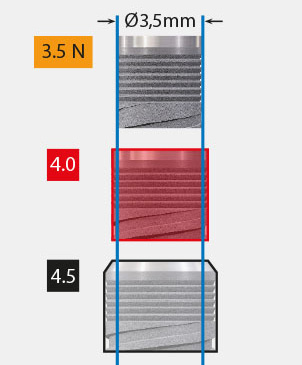
SKY classic platforms
Each abutment fits all 3 implant diameters:
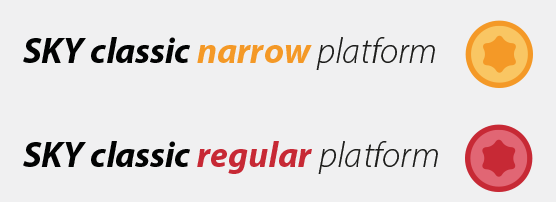
SKY classic 3.5 narrow plaform The abutments have the same diameter as the implants
SKY classic 4.0 Regular platform. Abutments with platform switch.
SKY classic 4.5 Regular platform. Abutments with platform switch and back taper.
All SKY classic implants use the proven SKY platform. As a result, users benefit from a consistent prosthetic workflow and full compatibility with the existing SKY prosthetics.
Implant positions
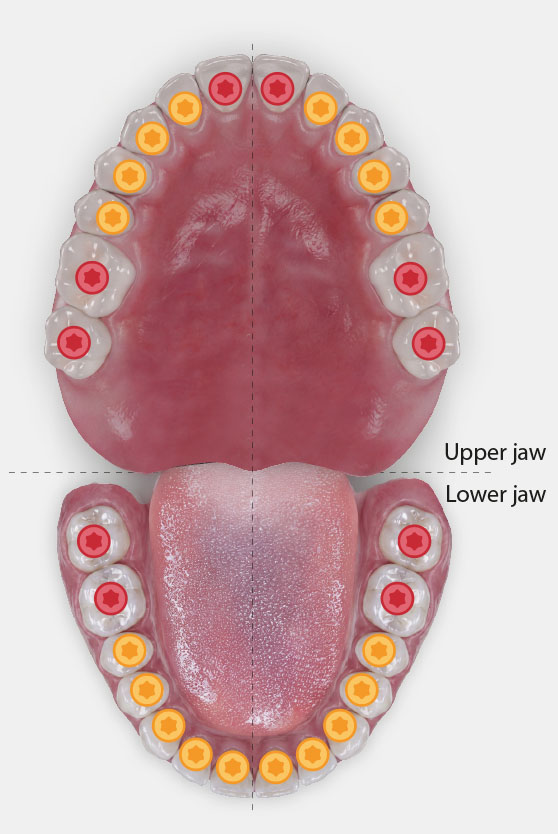
This depiction illustrates the ideal implant position for the SKY classic narrow platform and for the SKY classic regular platform.
The narrow platform is particularly suitable for anterior and premolar restorations as well as situations with a short distance to neighbouring teeth or implants. It also offers flexibility in anatomically demanding situations such as thin soft tissue biotypes or sloping bone ridges.
Implant-abutment connection
The benefits of the Torx-like hex connection
The gold standard for high torque insertion.
A stable long-term connection between implant and abutment.
The stable connection with shoulder support ensures passive fit for all types of prosthetic restorations - no vertical error.
No damage to the implant and no risk of the insertion instruments getting stuck.